How to Get Money for Your Business in India: Loans, Government Schemes and Other Funding Options (2026)
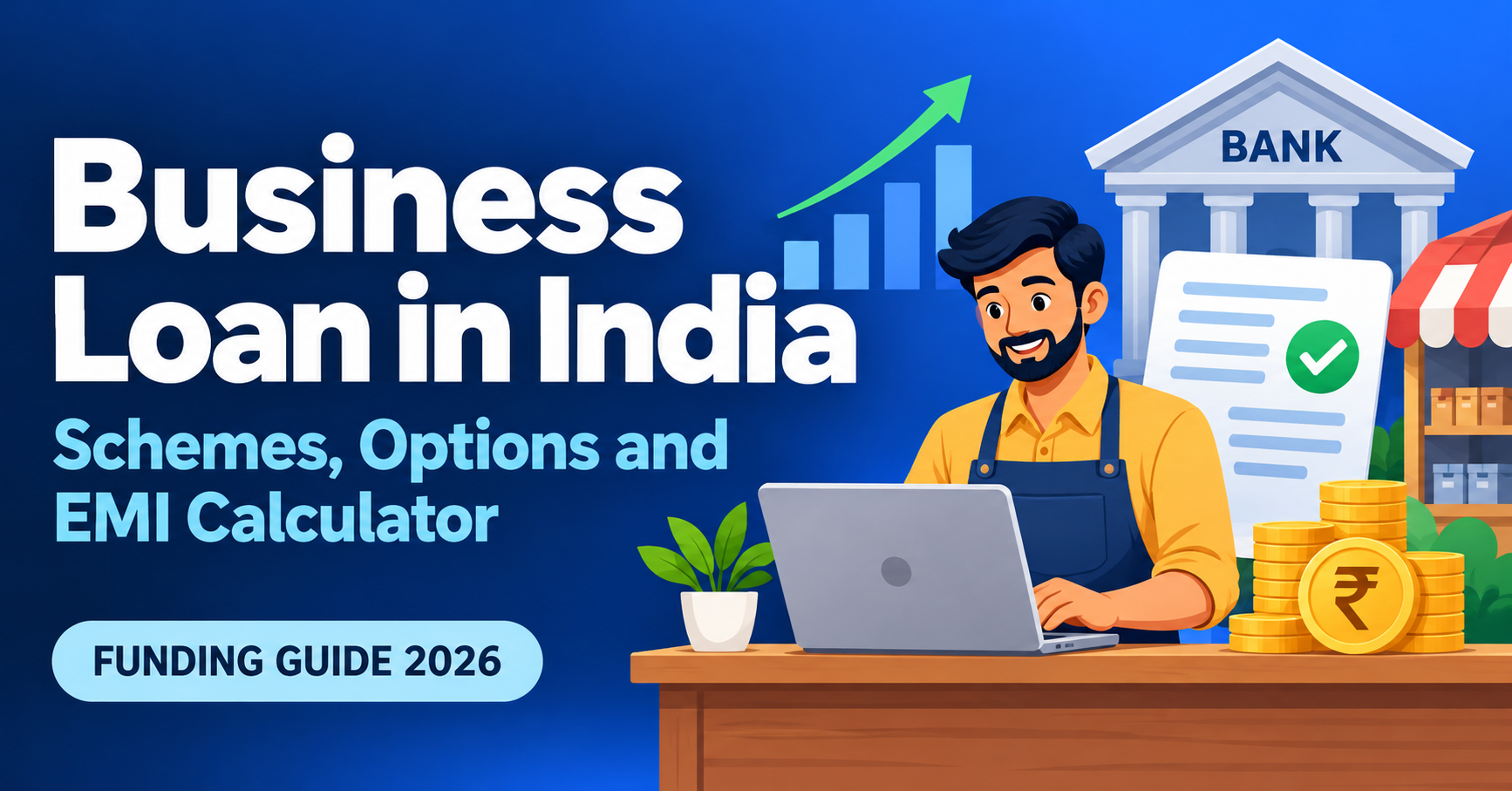
Almost every small business hits the same wall: you need money to start, to stock up or to bridge a slow month. In India there are many ways to raise it, from government-backed loans to bank finance and short-term credit. This guide explains the main options in plain language, compares them, and helps you work out which one fits, with an EMI calculator and a documents checklist. Last reviewed: 29 October 2026.
The main ways to get money for your business
| Option | Best for | Typical size | Main catch |
|---|---|---|---|
| Mudra loan (PMMY) | Small shops, services, micro units | Up to ₹10 lakh in three stages (Shishu, Kishor, Tarun) | Bank decides based on your plan and repayment ability |
| PMEGP subsidy loan | New manufacturing or service units | Project cost limits apply, with a subsidy on the project | For new projects, not existing units. Needs a project report |
| Stand-Up India | New businesses by women, SC or ST entrepreneurs | ₹10 lakh to ₹1 crore | For new (greenfield) enterprises only |
| PM SVANidhi | Street vendors | Small working-capital loan, with higher limits on timely repayment | For street vendors with vending proof |
| CGTMSE-backed loan | Businesses without collateral | Collateral-free up to a set limit | You still need a bank to lend. The guarantee only covers the bank's risk |
| Bank or NBFC business loan | Established businesses with records | Depends on turnover and credit score | Needs ITR, bank statements and often GST returns |
| Business credit card | Short-term expenses you can repay quickly | Limited by your approved credit limit | High interest if you carry a balance |
Limits, interest rates and rules change from time to time, so always confirm the latest details on the official scheme website or with the bank.
Find your best funding option
Answer a few questions to see which options may suit you. This is a starting point, not a loan approval.
Funding finder
Government-backed options, in more detail
Mudra loans (PM Mudra Yojana)
Mudra loans are collateral-free loans for small and micro businesses, given by banks, small finance banks and other lenders. They come in three stages: Shishu (up to ₹50,000), Kishor (₹50,000 to ₹5 lakh) and Tarun (₹5 lakh to ₹10 lakh). Limits and categories have been expanded over time, so check the latest on the official site.
PMEGP (for starting a new unit)
The Prime Minister's Employment Generation Programme gives a margin-money subsidy on loans for new manufacturing and service projects, and you apply with a project report. The subsidy depends on your category and area. It is not meant for expanding an existing business.
Stand-Up India
This scheme supports new enterprises started by women and by SC and ST entrepreneurs, with bank loans between ₹10 lakh and ₹1 crore.
CGTMSE (collateral-free guarantee)
The Credit Guarantee Fund Trust for Micro and Small Enterprises gives banks a guarantee, so they can lend to eligible businesses without asking for collateral. You apply to a bank or lender, and not to CGTMSE directly.
Do the math before you borrow: EMI calculator
Know exactly what a loan will cost you every month before you sign.
Business loan EMI calculator
Documents to keep ready for a loan
Tick what you already have. Your progress is saved in this browser.
0 of 10 done
Missing a registration? See our guides on Udyam registration, GST registration and choosing a business structure.
How to improve your chances of approval
Keep clean records
Regular invoices, bank entries and tax filings show lenders you can repay. Create bills with our free invoice generator.
Protect your credit score
Pay existing EMIs and card bills on time. A higher score gets better rates.
Register your business
Udyam and GST registration make you eligible for many schemes and make lenders more comfortable.
Show a clear plan
Explain what the money is for and how you will repay it.
Compare offers
Check the interest rate, processing fee and prepayment charges, not only the EMI.
A short-term option: a business credit card
A credit card can help with small, short-term business costs such as software, ads or supplies, because you get an interest-free period if you pay the full bill on time. It is not a way to fund a long-term business or to borrow for months. If you carry a balance, card interest is usually much higher than a normal business loan, often several percent every month.
What does carrying a card balance really cost?
Check the real interest rate on your own card's terms, because it varies.
Thinking of a credit card for business expenses?
AU Small Finance Bank offers credit cards, with different options and fees. You can look at the bank's current offers and check the eligibility, fees and interest before you decide. Apply only if you can repay the full bill every month, and read the terms carefully. Approval is decided by the bank and is not guaranteed.
See AU Bank credit card offers
Affiliate link. We may earn a commission if you apply. Never share your OTP, CVV or PIN with anyone.
Frequently asked questions
How can I get a business loan without collateral?
Mudra loans and CGTMSE-backed loans are designed for collateral-free lending to small businesses. You apply through a bank or lender, and the bank decides based on your business and repayment ability.
Can I get a business loan with no income proof?
It is hard. Lenders usually want bank statements, tax returns or sales records. Small Mudra loans are easier, but you still need to show that the business can repay.
Is Udyam registration needed for a loan?
It is not always compulsory, but it helps a lot. Many MSME schemes and priority-sector loans use Udyam registration. See our Udyam guide.
Which is better: a business loan or a credit card?
For planned, larger or longer-term needs, a business loan has a lower interest cost. A credit card suits small, short-term expenses that you repay in full before the due date.
How long does a business loan take?
It can take anywhere from a few days to a few weeks, depending on the lender, the scheme and how complete your documents are.
Will applying for a credit card affect my credit score?
An application usually leads to a credit check, which can slightly affect your score. Applying for many products in a short time can lower it more, so apply only when you need to.
Need help getting your papers ready?
We can help with Udyam and GST registration and with organising your documents, so your loan application is complete.
Get help with registration and documents →Also read: digital checklist for a new small business.
This article is general information, not financial, legal or investment advice, and we are not a lender or a loan agent. Scheme limits, interest rates, fees and eligibility change and are decided by banks and the government. Confirm all details on the official websites or with the lender before you apply.
Comments
No comments yet. Be the first to share your thoughts.
Leave a Comment
Related Posts

Why Cyber Cafes Are Struggling in 2026 (and 10 Ways to Grow Yours)
Why is the cyber cafe business struggling in India? Learn the real reasons, 10 practical ways to grow, a free break-even calculator and a tool to run your shop.

Diwali 2026 Website Deals: Domain, Hosting and Business Email for Your Business (BigRock Buying Guide)
Planning to launch your business website this Diwali? See what to buy, how to compare domain, hosting and email deals, and check BigRock’s live offers. Free 3-year cost calculator inside.
Cyber Cafe Management Software in India (2026): Common Problems, Solutions and How to Choose
Struggling with lost documents, repeated typing and queue fights? See the 6 biggest cyber cafe problems, how to fix them, and how to choose management software. Free calculator inside.
Need a system like this for your business?
Tell us what you're working with today and we'll show you what a custom system could look like — no obligation.